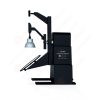
LM-79 Goniofotometar s detektorom kretanja (ogledalo tipa C)
LSG-6000
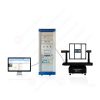
Goniofotometar svjetiljke visoke preciznosti
LSG-1890B
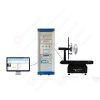
Visoko precizna rotacijska svjetiljka Goniospektroradiometar
LSG-1890BCCD

Goniofotometar za automobilske i signalne svjetiljke
LSG-1950
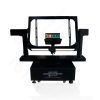
Goniofotometar za svjetiljke prometnih signala
LSG-1950S
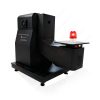
VAD uređaj za vizualno upozorenje na požarni alarm Goniofotometar
LSG-1930
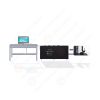
Kompaktni goniofotometar
LSG-1200A
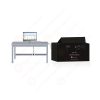
LED goniofotometar
LSG-1100
 Ispitivanja LED-ova i svjetiljki
 LM-79 i LM-80 Testna rješenja
 Rješenja za testiranje LED vozača
 Rješenja za testiranje kućanskih aparata
 Rješenja za ispitivanje mobilnih i mreža
 Rješenja za ispitivanje automobilske elektronike
 Audio-video i IT rješenja za testiranje
 Rješenja za ispitivanje kabela i žica
 Rješenja za testiranje utikača i utičnica
 Rješenja za testiranje prekidača za napajanje
 Rješenja za ispitivanje transformatora
 Rješenja za testiranje električnih igračaka
 Rješenja za ispitivanje mjerača energije
 Rješenja za ispitivanje motornih alata
Odaberite organizaciju
pregledavati standarde
Sažetak: What is hipot testing used for is a frequently raised core question in the electrical manufacturing and testing & certification industry. Hipot testing, also known as dielectric strength test, applies AC/DC high voltage higher than the rated operating voltage to electrical products while monitoring breakdown leakage current. It evaluates the insulation withstand limit of the device under test (DUT) and detects fatal safety hazards including insulation damage, insufficient creepage distance and inter-turn short circuit. It is a mandatory test item required by global safety certifications such as 3C, CE and UL. Designed exclusively for high-voltage safety inspection, the LISUN WB2671B AC & DC hipot tester supports both AC and DC hipot test modes. It outputs high voltage ranging from 0 to 5 kV with maximum AC breakdown current up to 100 mA. Equipped with overcurrent protection, automatic discharge and audible & visual alarm functions, it is suitable for production line quality inspection and laboratory compliance verification of various products including small household appliances, LED lighting and electronic components. Centered on What is hipot testing used for, this paper systematically discusses four core purposes of hipot testing. It summarizes parameter differences of the full WB267x series in tables and elaborates practical application scenarios across various industries, providing comprehensive technical references for enterprises on equipment selection and safety compliance testing.
Insulation failure of electrical equipment may lead to electric shock, fire, equipment burnout and other serious safety accidents. Domestic standards GB 4706.1, GB 7000.1 and international standards IEC 60335, IEC 60598 clearly stipulate that all electrical products to be marketed must undergo hipot testing. Many R&D and quality inspection staff often ask: What is hipot testing used for? Simply regarding it as a method “to check insulation quality” cannot reflect its full value. Hipot testing fulfills multiple functions including safety hazard screening, compliance certification, defect localization and service life prediction.
Conventional basic high-voltage instruments feature narrow measuring ranges and lack precise leakage current monitoring, making standardized hipot testing impossible. The LISUN WB2671B AC & DC hipot tester can accurately output AC and DC high voltage and capture breakdown current with tiny amplitude in real time, realizing all intended purposes of hipot testing. Based on practical operation of WB2671B, this paper thoroughly analyzes core purposes of hipot testing, distinguishes applicable scenarios between AC hipot test and DC hipot test, and adopts specification tables to clearly answer the industry-wide question of What is hipot testing used for.
Purpose 1: Detect hidden insulation defects to prevent electric shock and fire risks
This is the fundamental purpose of hipot testing. By simulating extreme operating conditions such as power grid surge and instantaneous overvoltage, high voltage several times the rated value is applied to break down weak insulation layers and expose concealed product defects. Typical defects include cracked power cord insulation, insufficient creepage distance between luminaire metal housing and lamp base, inter-turn short circuit of motor windings, and damaged insulation on high-voltage PCB traces.
When hipot testing is performed with WB2671B, the instrument continuously collects leakage current from 0~100mA (AC) and 0~20mA (DC). Once the current exceeds the threshold, high voltage will be cut off immediately with audible and visual alarms to rapidly sort out nonconforming products, fundamentally eliminating risks of electric shock and fire during end-user operation. For instance, AC 2000V hipot test on electric kettles and DC 3000V housing hipot test for LED ceiling lights can identify insulation defects via this method.
Purpose 2: Comply with domestic and international safety standards to obtain market access qualifications
The core commercial purpose of hipot testing: it is a mandatory test required by certifications such as 3C, CE, FCC, UL and VCCI. Products without qualified hipot test reports cannot be sold domestically or exported overseas. Different industrial standards specify fixed test voltage, duration and leakage current thresholds: small household appliances adopt AC 1500V / 1min, LED lighting uses DC 2000~3000V, and industrial equipment requires AC 3000~5000V.
WB2671B supports preset duration from 1s to 99s with voltage accuracy of ±5%. All test data can be fully stored. The generated hipot test reports satisfy audit requirements of third-party laboratories including CQC, TÜV and SGS, meeting enterprises’ demands for domestic sales and cross-border export compliance certification.
Purpose 3: Locate insulation design defects for product optimization during R&D phase
Hipot testing serves R&D purposes: in prototype development, gradient rising hipot testing accurately pinpoints weak insulation positions and guides engineers to select better materials and adjust creepage distances / clearances. Repeated breakdown at a fixed voltage indicates insufficient thickness of insulating materials or unreasonable housing partition structure.
With the gradient voltage rise function of WB2671B, high voltage can be increased step by step to record critical breakdown voltage. It enables quantitative evaluation of insulation safety margin and comparative analysis on hipot performance of different insulating materials and housing schemes, supporting iterative product optimization and reducing nonconformity rate during mass production.
Purpose 4: Mass production inspection to stably control outgoing quality
Hipot testing for mass production: rapid batch inspection on assembly lines of home appliances, lighting products and electronic components to realize full outgoing quality control. WB2671B features a user-friendly interface; standard test parameters can be recalled with one click. Automatic discharge after testing eliminates manual pressure relief, greatly improving line efficiency for continuous hipot testing of large batches and preventing mass products with poor insulation from entering the market.
| Industrija | Typical DUTs | Primjenjivi standardi | Preporučeni uvjeti ispitivanja | Core Purposes Realized via Hipot Testing | Preporučeni model |
| Kućanski aparati | Rice cookers, electric kettles, air conditioners, small home appliances | HR 4706.1-2024 | AC 1500~2500V, duration 60s | Detect cracked power cords and aged winding insulation; support 3C certification and batch outgoing inspection | WB2671B |
| LED osvijetljenje | Downlights, street lights, LED drivers, ceiling lights | HR 7000.1-2023 | DC 2000 ~ 3000V | Verify isolation between live parts and housing to prevent electric shock; support domestic bidding and CE export certification | WB2671B |
| Elektroničke komponente | Film capacitors, relays, PCB boards, motor windings | GB / T14472 | AC 1000 ~ 2000V | Screen inter-turn micro short-circuit and insulation defects; incoming inspection and finished goods outgoing test | WB2671A / WB2671B |
| Medium-sized Motors & Air-conditioning Units | Fan motors, indoor & outdoor air conditioner motors | GB 4706.1 | AC 2000~2500V with high current monitoring | Identify risks of winding insulation breakdown, mass AC hipot testing on production lines | WB2673C |
| Industrial Control Cabinets & High-power Motors | Electric control cabinets, high-power drive motors | IEC 60204 | AC 3000V ~ 5000V | Insulation safety verification for complete industrial equipment, long-term continuous on-line testing | WB2673B |
| High-power Industrial Transformers | Power frequency transformers, isolation transformers | GB / T1094 | Max. AC 5kV with high current output | Hipot reliability test for complete high-power electrical equipment | WB2673A |
| High-voltage Street Lights & Medical Physiotherapy Equipment | Outdoor high-voltage lighting, medical diagnostic devices | GB 7000.1, IEC 60601 | Max. AC 10kV | Special high-voltage insulation hipot testing, meet medical safety certification requirements | WB2672A |
As shown in the table, the universal WB2671B is applicable to small home appliances, LED lamps and common electronic components. It simultaneously supports R&D defect verification, mass production inspection and compliance certification, making it the preferred equipment for SMEs and third-party testing laboratories. For special scenarios requiring high current or ultra-high voltage, WB2673 series and WB2672A can be selected according to actual working conditions.
| LISUN Model | Ispitni raspon napona | Trenutni raspon probijanja | Kapacitet transformatora | Vremenski raspon | Točnost |
| WB2671A | 0~5kV (AC/DC) | AC:0~20mA;DC:0~20mA | 100VA | 1 ~ 99s | ± 5% |
| WB2671B | 0~5kV (AC/DC) | AC:0~100mA;DC:0~20mA | 500VA | 1 ~ 99s | ± 5% |
| WB2673C | 0~5kV (AC) | AC: 0~200mA | 1KVA | 1 ~ 99s | ± 5% |
| WB2673B | 0~5kV (AC) | AC: 0~400mA | 2KVA | 1 ~ 99s | ± 5% |
| WB2673A | 0~5kV (AC) | AC: 0~600mA | 3KVA | 1 ~ 99s | ± 5% |
| WB2672A | 0~10kV (AC) | AC: 0~20mA | 200VA | 1 ~ 99s | ± 5% |
• Dual AC & DC output to cover two types of hipot testing: It supports power-frequency AC hipot test and DC hipot test, suitable for different test objects including cables/motors and luminaire housings. One instrument satisfies testing demands of multiple industries.
• Wide-range breakdown current monitoring: Max. 100mA AC range detects both minor insulation leakage and severe breakdown, ensuring effective defect screening.
• Multi-layer safety protection: Fast cut-off upon overcurrent, automatic discharge after test, audible & visual high-voltage warning to avoid hazards during long-duration continuous hipot testing on production lines.
• Presettable voltage & timing parameters: One-click recall of standard test schemes for simplified operation in certification and quality inspection scenarios.
• ±5% high output accuracy: Voltage and current readings meet metering requirements of national and IEC standards. Test data can be directly used for certification reports to support compliance certification.
In summary, we can fully answer What is hipot testing used for: hipot testing has four core purposes. First, identify hidden risks such as insulation damage and insufficient creepage distance to prevent electric shock and fire accidents. Second, satisfy mandatory domestic and international safety standards to obtain market access certifications including 3C and CE. Third, locate insulation design deficiencies during R&D to optimize product structures. Fourth, implement batch testing on production lines to maintain outgoing quality.
As a universal high-voltage testing instrument, the LISUN WB2671B AC & DC hipot tester provides 0~5kV AC/DC output and 100mA AC breakdown current, fully supporting all above hipot testing purposes. It fits the whole R&D, quality inspection and certification workflow of mainstream industries such as small household appliances, LED lighting and electronic components. Enterprises can refer to the above industry application table and select high-current or high-voltage models from WB267x series according to voltage and current requirements of products. Maximizing the values of hipot testing in safety screening, compliance certification, R&D optimization and mass quality control guarantees insulation safety and global market compliance of electrical products.
Oznake:WB2671BVaša adresa e-pošte neće biti objavljena. Obavezna polja su označena *

 Engleski
 中文简体
中文简体 Русский
 Español
 Português
 Türkçe
 العربية
 Deutsch
 Polski
 Italiano
 Français
 한국어
한국어 ไทย
ไทย Tiếng Việt
 日本語
日本語